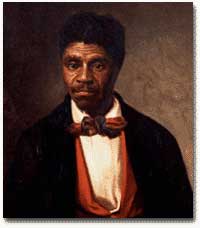
A meme acts as a unit for carrying cultural ideas symbols or practices, which can be transmitted from one mind to another through writing, speech, gestures, rituals or other imitable phenomena.
You know them. You love them. Here's an example of a famous one.
What does this have to do with APUSH?
For Unit 3 (the period from 1754-1800), create a historically appropriate meme. Utilize images of people/things from the era. Sum up the idea. Utilize www.memegenerator.net, and be sure that your meme is school appropriate.
Copy and paste the URL of the meme created into the comments section of the blog. This is due by October 27, so the class can use it to review for the Unit 3 test.
This is a 25 point homework assignment (and, most likely, the 2nd to last assignment of the quarter).
This bas relief depicts Signing of the Mayflower Compact, and is located at the Pilgrim Monument, Provincetown, MA
Having read Chapters 2 and 3, you're familiar with the Separatists (the Pilgrims, as they're more commonly known) who settled Plimouth Plantation. Did you know that in 1620, the Pilgrims spent five weeks exploring Cape Cod before they sailed to Plymouth, Massachusetts. By the time this posts, I will have spent a little over 10 days nearby. I digress. After spending weeks at sea, the Pilgrims resolved not to set foot on land until the Mayflower Compact was written and signed. The Mayflower Compact is the first instance of a democratic society in the New World.You should also be knowledgeable of the Puritans that settled Massachusetts Bay Colony (and, eventually, Hartford and New Haven), once you've completed the readings of Chapters 2 and 3. They're an interesting bunch that evolved in
The Mayflower Compact is a significant document in American history. Additionally, the influence of the General Laws of the colony, as well as other New England colonies is still visible today.
Ouch.
The Assignment A. Read the Mayflower Compact (1620). Then read The Book of the General Laws (1685).There is a question at the start, but there is also an answer at the end. They're valuable, but not necessarily what we're going to look at as a class. B. Consider the two documents. Answer the following questions in the form below, and submit them to Mr. Pagliaro. This is worth 25 points towards a student's quarterly average.
Perhaps students remember Captain John Smith from their childhood.
Imaginary John Smith Rendering
Of course, Disney was way off on the true John Smith. He was quite a self promoter, and also helped get people to move towards Virginia after a gunpowder accident. It seems his powder bag was ignited while he was still wearing it.
The Real Captain John Smith
While accident prone, it is true that Jamestown would not have survived without his guidance. His edict "He who doesn't work, doesn't eat," may have been stolen from the Bible, but it also saved the struggling colony and fort. It wasn't until resupply ships came (the First Supply, mentioned in the source title), that Jamestown really had a chance. On board, a young entrepreneur named John Rolfe. His horticultural interests would change the fate of Jamestown and England's interest in American colonies forever.
The Assignment A. Read What Happened Until the First Supply: The General History of Virginia There is a question at the start, but there is also an answer at the end. They're valuable, but not necessarily what we're going to look at as a class. B. Following the commenting guidelines, answer ANY of the following questions (choose 2 or 3), and respond to them in the comments section of this post.
What kind of audience does The General History of Virginia (1624) seem intended for?
Characterize Smith's style of narration. Would you call him objective, subjective, passionate, deadpan, ironic, humorous, serious? Cite examples to support your assessment.
One of the most famous stories in American history is that of Pocahontas's rescue of Smith. Some later readers have questioned the truthfulness of this account, however. It has been noted, for example, that Smith did not even mention the incident in his first narrative, and the writer James Branch Cabell has suggested that Smith borrowed the story from a book the English writer Richard Hakluyt published in 1609 or from any one of many similar stories that are found around the world (52). Citing details from Smith's writing or his life, argue that the story is totally true, partially true, or totally false.
How does Smith depict the Indians in this passage? Make a list of words and phrases that support your interpretation.
Where does Smith mention God in this piece? Write out those lines. What effect would this have had on Smith’s readers?
How does Smith depict himself in his writing? Support your answer with specific examples from the text.
John Smith famously took Jamestown's poorly provisioned and disciplined settlers and "whipped them into shape." He famously decreed "He who does not work, neither shall he eat" (though he took that from the Biblical 2nd Book of Thessalonians 3:10). Practicality and labor have been important parts of the American identity (what it means to be American) from the settlement of Jamestown to the modern day. Based on your reading of the textbook AND the reading from John Smith, does he present that "ethos"? Defend your answer with specific examples.
C. Return in a few days and read through the responses of others. Again, following the commenting guidelines, provide feedback, criticism, or ask questions. Also, if somebody responds to your comment, feel free to comment back, of course, being polite. It will help promote positive dialogue in class later this year.
Both B & C must be completed to earn full credit for the assignment. If Jamestown interested you, or you just want to know more, check out this interactive map of the original fort. It's really cool. And stay tuned to the blog for some great podcasts, and other supplementals regarding Jamestown, and the LOST colony of Roanoke!
The framework of the American government today-a representative government with a strong federal government--was laid out in a series of essays or treatises collectively called the Federalist Papers. The eighty-five essays appeared in one or more of the following four New York newspapers: 1)The New York Journal, edited by Thomas Greenleaf, 2)Independent Journal, edited by John McLean, 3)New York Advertiser, edited by Samuel and John Loudon, and 4)Daily Advertiser, edited by Francis Childs. Initially, they were intended to be a twenty essay response to theAntifederalistattacks on theConstitutionthat were flooding the New York newspapers right after the Constitution had been signed in Philadelphia on September 17, 1787. TheCato lettersstarted to appear on September 27, George Mason’s objections were in circulation and the Brutus essayswere launched on October 18. The number of essays inThe Federalistwas extended in response to the relentless, and effective, Antifederalist criticism of the proposed Constitution. The first 36 essays together were bundled, and —they appeared in the newspapers between October 27, 1787 and January 8, 1788, —and published them as Volume 1 on March 22, 1788. Essays 37 through 77 ofThe Federalistappeared between January 11, and April 2, 1788. On May 28, John McLean took Federalist 37-77, as well as the yet to be published Federalist 78-85, and issued them all as Volume 2 ofThe Federalist. Between June 14 and August 16, these eight remaining essays, —Federalist 78-85, —appeared in theIndependent JournalandNew York Packet.The author of Federalist Paper 51 is not known, though it was most likely James Madison or Alexander Hamilton. The author argues that the Constitution's federal system and separation of powers will protect the rights of the people.
Read Federalist Paper #51. Then, in the comments section, respond to three of the following questions.
Why is the author so concerned with the distribution of power between the parts of government?
What "check and balances" does the author propose to keep the three powers of the government separate and distinct?
How does the author advocate for protections or safeguards for the rights or liberties of the people?
How does the separation of powers protect minority interests?
Does the Constitution account for all of the possible interests in American society and protect them equally?
Students interested in an enrichment activity may complete the Federalist ReWrite for up to 50 points in their first quarter average. This must be completed and submitted by 10/25/2013.
Columbian Exchange - The positives and negatives of the Age of Exploration
To help students in the 2013-14 APUSH class make sense of Chapter 2 in Lies My Teacher Told Me (1493-The True Important of Christopher Columbus), answer any of the following questions. Do not hesitate to ask your own questions, or even to question or comment on something one of your classmates may post. The only things to remember are to avoid text-like phrasing, and to remain polite.
The Assignment A. Read the chapter from Lies My Teacher Told Me.
B. Following the commenting guidelines, answer ANY of the following questions (choose 3 or 4, please do NOT answer all of them), and respond to them in the comments section of this post.
As you read through 1493 in Lies...
One question I had about what I read was....
What were you thinking about as you were reading? Can you reconcile this version of Columbus with the others you've read or learned?
What question(s) can you ask about what you read?
While I read, I was curious about...
What words or ideas need clarifying for you?
What does the author want me to remember or learn from this passage?
What is the most important information in this passage?
What kind of “teacher” question can I ask about the main idea?
In my own words, this is about ...
C. Return in a few days and read through the responses of others. Again, following the commenting guidelines, provide feedback, criticism, or ask questions. Also, if somebody responds to your comment, feel free to comment back, of course, being polite. It will help promote positive dialogue in class later this year.
Both B & C must be completed to earn full credit for the assignment.
The Winthrop Fleet was a group of eleven sailing ships under the leadership of John Winthrop that carried approximately 700 Puritansplus livestock and provisions from England to New England over the summer of 1630. The Puritan population in England had been growing for many years leading up to this time. They disagreed with the practices of the Church of England, whose rituals they viewed as superstitions and attempted over many years to modify religious practice in England to conform to their views. King James wished to suppress this growing rebellious movement. Nevertheless, the Puritans eventually gained a majority in Parliament. James' son King Charles came into the greatest possible conflict with the Parliament, and viewed them as a threat to his authority, temporarily dissolving parliament in 1626, and again the next year, and finally dissolving parliament permanently in March 1629. Motivated by these political events, a wealthy group of leaders obtained aRoyal Charterin March 1629 for acolony at Massachusetts Bay.
The initial migration took three phases. A fleet of five ships had departed a month previously for New England that included approximately 300 colonists, led by Francis Higginson. Later that year, the remaining investors elected John Winthrop as governor, who then led a fleet of 5 ships, followed by 6 more several weeks later, totaling nearly 700. Additionally, an existing settlement, Salem, was established in 1626. Winthrop's colony and authority extended control over Salem, previously run by John Davenport.
The Great Migration of Puritans to New England continued for nearly a decade. They came in family groups, rather than as isolated individuals, and were motivated chiefly by a quest for freedom to practice their Puritan religion.
Meanwhile, other Puritans and members of Parliament, namely Oliver Cromwell, fought a series of civil wars from 1642-1651. They deposed, tried, and eventually executing Charles I.* The English Civil War led to the establishment of a Commonwealth government that lasted until 1660, and the Puritan-dominated Parliament actually banning Christmas celebrations.
The above information was modified from various Wikipedia entries.
The execution of Charles I
John Winthrop's Model of Christian Charity - delivered on board the Arbella as members of the Massachusetts Bay Colony sailed toward the New World - describes the struggle of Puritans and their "errand into the wilderness." Their struggle? How can a group of outcasts who have a habit of quarreling with authority construct a strong society without fighting amongst themselves?
As you know from your reading of Chapter 3, John Winthrop (1588-1649) was governor of the Massachusetts Bay Colony - a group that left England in search of trade opportunities in the New World. Like most members of the Colony, Winthrop was a Puritan. This group claimed that the Church of England was corrupted by selfish leaders and petty squabbles. In contrast, Puritans envisioned an idealized community in which all citizens would focus their lives on the word of God. Ironically, the Puritans' almost single-minded pursuit of a perfected society based on biblical teachings resulted in impressive success in secular affairs. This success is often explained by the so-called "Puritan Work Ethic" - the ability to sacrifice personal ambitions for larger goals. Puritans also believed that they could be a blessed people - chosen by God to set an example for others.
Both of these aspects have Puritan New England, and Winthrop's sermon have infused themselves into the American Identity. What it means to be an American, for generations, has involved hard work (especially on the East Coast [though, since the 18th century, this has constantly been diminished by increased technology]). Furthermore, the idea that the Puritan community that settled Massachusetts Bay Colony in 1630 was to be an example for others to follow has truly been one of the things that America has stood for since that time, and increasingly so since the American Revolution. To this day, the United States of America constantly redefines how it will be an example to others, whether through its own actions, or acting on the behalf of other peoples and nations. Some might not like it, but it is truly, what the identity of the United States of America has become: hence, American Identity.
The Assignment
A. Read the excerpt from John Winthrop's A Model of Christian Charity, in regards to being a "City upon a hill." B. Following the commenting guidelines, answer ANY of the following questions (choose 2 or 3), and respond to them in the comments section of this post.
To what extent did John Winthrop’s “A Model of Christian Charity” provide a powerful and workable founding vision for his colony? For what would become the United States of America?
What does John Winthrop’s “Model of Christian Charity” sermon explain about the beliefs and goals of the Puritans?
One way to read the lay sermon A Model of Christian Charity is as a kind of a “peptalk” or “motivational speech.” What points does Winthrop seem to want to make his audience feel good or motivated about?
The most lasting, final image from A Model of Christian Charity is that of the “city on a hill." Think carefully about this image. What sorts of things does it suggest to you, literally—that is, what is important about a literal city on a literal hill? Then, think about why Winthrop is turning to that image in this particular context—what does he want to suggest about his Puritan community and their sense of mission?
The phrase “city on a hill” is still used by politicians today in speaking about America. Why? What does this image still suggest about America’s conception of itself?
C. Return in a few days and read through the responses of others. Again, following the commenting guidelines, provide feedback, criticism, or ask questions. Also, if somebody responds to your comment, feel free to comment back, of course, being polite. It will help promote positive dialogue in class later this year.
Both B & C must be completed to earn full credit for the assignment.
The Assignment A. Read the excerpt from ...The Destruction of the Indies.. There is a question at the start, but there is also an answer at the end. They're valuable, but not necessarily what we're going to look at as a class. B. Following the commenting guidelines, answer ANY of the following questions (choose 1 or 2), and respond to them in the comments section of this post.
What motivations may have led to the way Spaniards affected the native Caribbean population as they did? What motivated Spanish colonists?
What personal motivations might have led de Las Casas to petition the Spanish crown for leniency towards Native Americans?
Encomiendawas a legal system that was employed mainly by the Spanish crown during the Spanish colonization of the Americasto regulate Native American labor. What are your impressions of the encomienda system? Be very specific; avoid being general.
C. Return in a few days and read through the responses of others. Again, following the commenting guidelines, provide feedback, criticism, or ask questions. Also, if somebody responds to your comment, feel free to comment back, of course, being polite.
Both B & C must be completed to earn full credit for the assignment.
Raphael Sanchez was the treasurer of Spain for Queen Isabella of Castille and King Ferdinand of Aragon. This short letter to Sanchez details his original journey to the Caribbean in 1492, after his return to the port of Lisbon in modern Portugal. Columbus addressed it, "Letter addressed to the noble Lord Raphael Sanchez, Treasurer to their most invincible Majesties, Ferdinand and Isabella, King and Queen of Spain, by Christopher Columbus, to whom our age is greatly indebted, treating of the islands of India recently discovered beyond the Ganges, to explore which he had been sent eight months before under the auspices and at the expense of their said Majesties." That's a mouthful. At the same time, it leaves some confusion, as whether Columbus recognized his mistake yet, or not. In the address, he describes the islands he explored as "of India...beyond the Ganges." Columbus refers to the Island of Juana. Today, we refer to that island as Cuba. San Salvador, the island Columbus first arrived at in the Caribbean, was already settled by the Taino who called their island Guanahani. The Taino were a part of the greater group of Natives known as the Arawak. For a time in the 1600s to 1925, this island was called Watlings island, and is part of the Bahamas. Today, it is called San Salvador, again. When will it be Guanahani (or Guanahany) again? The Assignment A. Read the letter. There is a question at the start, but there is also an answer at the end. They're valuable, but not necessarily what we're going to look at as a class. B. Consider the letter. Answer the following questions in the form below, and submit them to Mr. Pagliaro.
For your viewing pleasure, this might help when you've completed the readings on Columbus, as well.
After spending class discussing the Civil Rights movement of the 50s and 60s, it is time to look at its cultural impact. Bob Dylan is "...an American musician, singer, songwriter, music producer, artist, and writer. He has been an influential figure in popular music and culture for more than five decades. Much of his most celebrated work dates from the 1960s when he was an informal chronicler and a seemingly reluctant figurehead of social unrest."
Students will listen to two songs by Bob Dylan. The first is mandatory for all students. The second is a choice. Afterwards, they will research the events described in the song, and analyze the lyrics. Looking at the historical account and the artistic account, students must analyze and evaluate the song. Caution, may contain explicit lyrics.
Wisconsin Senator Joseph McCarthy had a lackluster career – at least,
that is, until he claimed the U.S. government was riddled with
conspiratorial Communists. In this episode, Sarah and guest host Ben
explore the hysteria-fueled rise of Joseph McCarthy.
President Franklin Roosevelt's election in 1932 was based on his promise of a NEW DEAL for America in the midst of the Great Depression. FDR's First Hundred Days of being in office in 1933 were a whirlwind of reform measures aimed at helping the nation remove itself from the Depression.
Immediately, he had the banks closed. This was to reorganize the banking structure of America and restore its confidence in the banking system. He explained this in his 1st Fireside Chat.
Please view the following lessons, and come to class with your note-guides ready to go.
"The past is a foreign country: they do things differently there." That was the opening line of L.P. Hartley's novel The Go-Between.
It's also a decent description of how a lot of us feel about many
topics in American history. It's not easy for us to understand, for
example, exactly why our nineteenth-century forebears got so worked up
over issues like tariff policy or the gold standard.
But the 1920s don't seem so foreign at all—more like a goofy reflection of our own times, viewed through a funhouse mirror.
In both eras—the 1920s and today—we see presidentselected because the voters liked their personalities, only to endure administrations mired in corruption and scandal.
In both eras, we see soaring stockmarkets, providing euphoric investors with incredible financial returns. Then a tragic drop in stock prices
In both eras, we see a widening gulf between the incomes of the rich and the poor and middle-class.
In both eras, we see a populace enthralled by celebrity, zealously tracking every move of America's sports and entertainment heroes.
In both eras, we see a showdown between the secular values of the marketplace—in which everything is for sale, and sex sells—and the old-fashioned religious principles of fundamentalist Christianity.
Snow days used to be awesome. Now, they're kind of a bummer. Personally, one or two would be fine by me. I could modify and adjust. But many are a dangerous thing. With the vast expanse of US History to cover in AP US History by early May, snow days can be come quite stressful. If, like the end of the year, the AP exam moved, it would be one thing. But that date was set in stone before our school year began, May 15. In fact, I already know that next year's exam is on May 14.
What's the point of this post? Well, we survived a hurricane. But to add this blizzard...well, nobody has time for that. Who's going stir crazy with cabin fever? I know that I am.
Before we left class on Wednesday, I gave the A Day students a copy of Friday's work, preparing for the storm. I just want to remind you of that. However, since Monday is now cancelled, we've got a B day we're going to miss as well. We're missing our lesson on immigration and urbanization from Chapter 25 (everyone received an assignment when they left the last class), there are mini lessons* below to accompany those. I don't know what to do, other than to provide you with the materials. Additionally, the homework from Friday/Monday is attached as well. Please everyone try to take care of the following flipped class lessons, and complete the Chapter 26 notes, and guide, as well.
Chapter 25 - Immigration & Urbanization - Note Guide (In case you still need to use it, I tried to put the flipped lessons in order with the note guide)
Chapter 26 - The West & Populism -You can find the Chapter 26 note guide HERE and the study guide HERE. (The Study Guide was the HW from the class we missed).
Farmer's Revolt Part 2: The Election of 1896 (Note significance of William Jennings Bryan's Cross of Gold speech)
Also, if you haven't seen the film Far & Away, here's a great scene, it looks at a Land Grab under the Homestead Act, and the origin of the term Oklahoma Sooner. Really, this film is a great one to encompass everything we've seen in this unit: immigration, urbanization, the railroad boom, people moving west, and gaining land under the Homestead Act.
*Note: The links for the mini lessons take a few seconds to load all the media. Be patient.
Use the resources below to prepare for class. Students are expected to bring notes on the materials to class in order to fuel class discussion and course activities. Coming to class unprepared will severely limit a student's understanding of the topics.
Popular Sovereignty and Westward Expansion
The Kansas-Nebraska Act and Bleeding Kansas
How was popular sovereignty fueled by personal greed? How did it fuel the flames of sectionalism? What effects of this act were so controversial?
This was the best Bill presented to congress because it..."...[Removes] all past compromises with slavery and makes all future compromises impossible. Thus it puts freedom and slavery face to face and bids them to grapple. Who can doubt the result?" ~ Charles Sumner, Senator, Massachusetts.
Use these resources to prepare for class (11/21). The class will be spent analyzing and evaluating Domestic Policy during the Jacksonian Era. Take notes on each in whatever format works best for you. Who were the key figures? What were the key issues?
One of the more interesting, peculiar incidents of Jackson's term as President was the Eaton Affair. The Eaton Affair was a sex scandal that split Jackson's cabinet. The issue of Peggy Eaton and her husband, Secretary of War, John Eaton is interesting. It is something I wish we had more time to discuss in class. It certainly demonstrates both Jackson's distrust of elites and his stubbornness. They didn't call him Old Hickory for nothing. Shortly before Jackson's inauguration, his Secretary of War, John Henry Eaton, an old army comrade, married Margaret O'Neale Timberlake. Rumors that "Peggy" O'Neale's first husband had committed suicide over her relationship with Eaton soon spread throughout Washington. The wives of prominent politicians, ESPECIALLY VICE PRESIDENT JOHN C. CALHOUN'S WIFE, refused to invite her to social affairs and demanded that their husbands boycott events to which Peggy was invited. These parties and dinners were crucial to Washington politics; they provided a private forum for politicians to discuss legislation, form alliances, and strike deals - without them the business of governing could be seriously hampered.
Which of Jackson's character attributes are demonstrated in the above video?
Columbian Exchange - The positives and negatives of the Age of Exploration
To help students in the 2011-2012 APUSH class make sense of Chapter 2 in Lies my Teacher Told Me (1493-The True Important of Christopher Columbus), answer any or all of the following questions. Do not hesitate to ask your own questions, or even to question or comment on something one of your classmates may post. The only things to remember are to avoid text-like phrasing, and to remain polite.
As you read through 1493 in Lies...
*One question I had about what I read was....
*What were you thinking about as you were reading?
*What question(s) can you ask about what you read?
*While I read, I was curious about...
*What words or ideas need clarifying for you?
*What does the author want me to remember or learn from this passage?
*What is the most important information in this passage?
*What kind of “teacher” question can I ask about the main idea?
*In my own words, this is about ...
Opechancanough’s 1622 Uprising in Virginia-Edward Waterhouse, Declaration, 1622
Fifteen years after settling Jamestown, the Powhatan completed a surprise raid on the colonists. Edward Waterhouse's Declaration explains to investors of the London Virginia Company exactly what took place, the losses, and the effects of the raid. Until this time, the Colonists felt relations had been friendly (even if they would kidnap Powhatan leaders whenever they ran out of food, clean water, or other necessities, in order to force their neighbors to help).
To decipher 17th century words that may be spelled differently, try pronouncing them aloud.
When students are finished reading, they should answer any or all of the following questions.
Do not hesitate to ask your own questions, or even to question or comment on something one of your classmates may post. The only things to remember are to avoid text-like phrasing, and to remain polite.
What is the colonial reaction to the attack? Provide support.
How was the attack prepared? How did the colonists survive?
Why did Waterhouse suggest conquest was preferable to civility? Provide support.
How might this Declaration have read, had Opechancanough written it? What evidence from The American Pageant supports this?